Almost everything people say about the origins of Halloween is slightly wrong. It was not invented by candy companies, it was not a Christian holiday hijacked by pagans, and the pumpkin was not part of it for most of its history.
What actually happened is stranger and far more interesting. Halloween is a two thousand year old harvest festival that crossed an ocean, collided with two Christian holy days, and was then rebuilt almost entirely by American children in the twentieth century.
History of Halloween: From Samhain to Trick or Treat
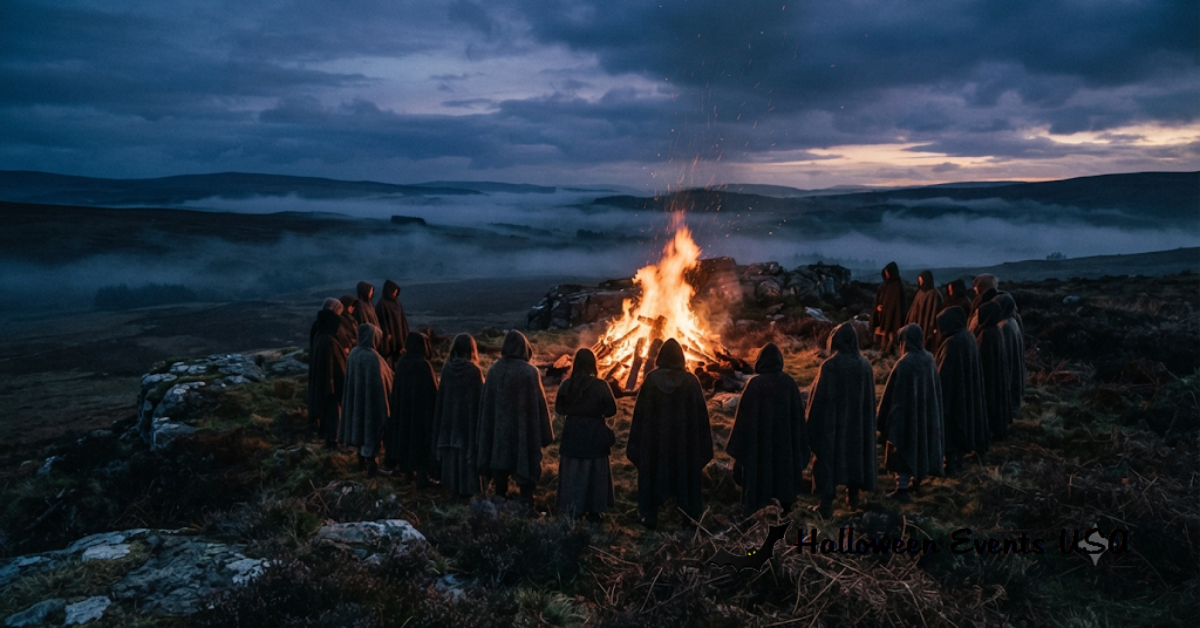
The oldest thread runs back to Samhain, a Gaelic festival marking the end of the harvest and the beginning of winter. It fell around the first of November, at the hinge point of the year.
The central belief was that on this night the boundary between the living world and the otherworld grew thin, and that things could cross over in both directions.
- Cattle were brought down from the summer pastures for the winter.
- Bonfires were lit on hilltops, and household hearths were relit from them.
- Places were set at the table for the dead who might return that night.
- People disguised themselves so wandering spirits would not recognize them.
That final point is where costumes begin. Disguise was not entertainment. It was protection, and it was taken seriously.
Guising: The Ancestor of Trick or Treating
By the late medieval period in Scotland and Ireland, disguise had turned into a practice called guising. Young people went door to door in costume, and here is the part most people miss entirely.
They had to earn what they were given. A guiser performed a song, a poem, a joke or a trick, and the household paid them in food. Nothing was handed over for free.
- The performance came first and the treat came second.
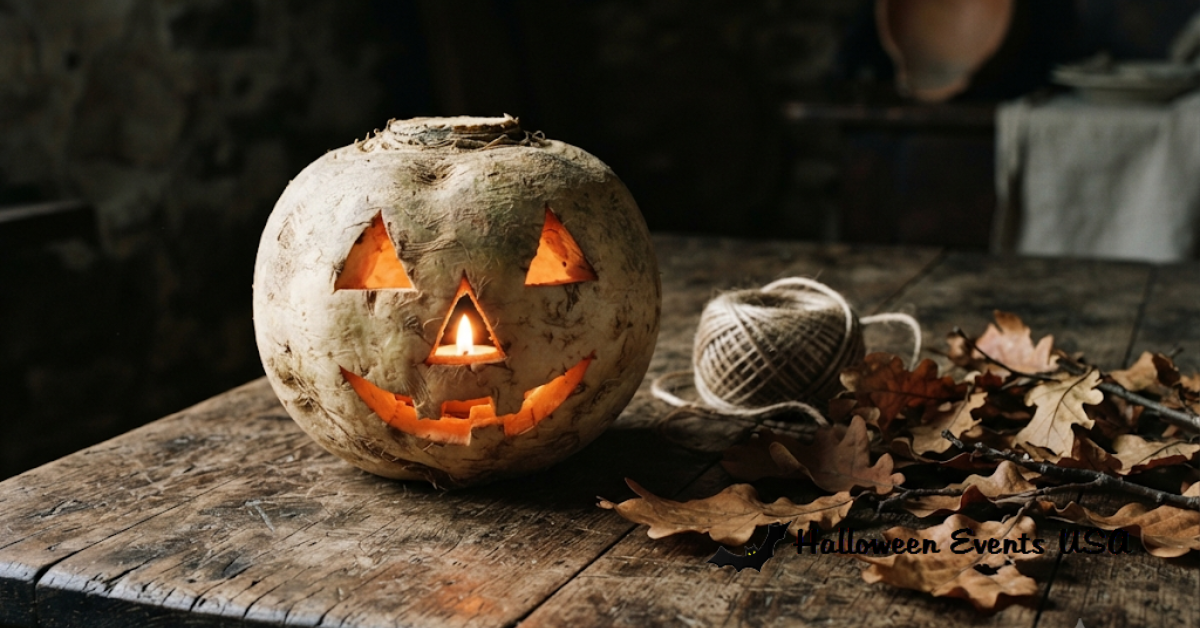
- Turnips and beets were hollowed out, carved with faces and lit with an ember.
- These lanterns warded off spirits rather than decorating a porch.
The carved turnip is the direct ancestor of the jack-o’-lantern. Pumpkins only entered the story once the tradition reached North America, where they were native, plentiful and far easier to hollow out.
Souling and the Christian Layer
In the ninth century the church placed All Saints’ Day on the first of November and All Souls’ Day on the second. The evening before All Saints’ Day was All Hallows’ Eve, which is where the word Halloween comes from.
Around this grew a practice called souling. The poor went door to door offering prayers for the dead of each household, and were given small spiced cakes in return.
- The cakes were called soul cakes, and each one represented a soul released from purgatory.
- Children eventually took over the practice from adults.
- Souling and guising ran side by side for centuries and slowly blurred into one custom.
This is the second half of trick or treating. Guising supplied the costume and the performance, while souling supplied the door to door request for food.
Halloween Crosses the Atlantic
Halloween arrived in North America with Irish and Scottish immigrants during the nineteenth century, particularly in the decades following the Irish famine.
For a long time it remained a regional, largely rural affair. It was a night of fortune telling games, bonfires, harvest parties and a considerable amount of vandalism.
- Apple bobbing descended from an older harvest game about who would marry first.
- Early American Halloween was as much about matchmaking as it was about ghosts.
- By the early 1900s the pranking had become a genuine civic problem in many towns.
How Modern Trick or Treating Was Invented
By the 1920s and 1930s, American Halloween pranking had escalated well past harmless mischief into broken windows, damaged streetcars and serious property destruction.
Communities responded by trying to buy the children off. Towns organized parties, parades and house to house candy rounds, deliberately offering a sanctioned alternative to vandalism.
- The phrase trick or treat appears in North American print in the 1920s and 1930s.
- The bargain was explicit. Give us a treat, or we play a trick on you.
- Sugar rationing during the Second World War paused the whole custom.
- It returned in force in the late 1940s and 1950s, in the new suburbs.
The suburb is the unsung hero of modern Halloween. Long rows of similar houses, close together on safe residential streets, made door to door candy collection practical for the first time in history.
Where the Candy Came From
Early trick or treaters received whatever the household happened to have. Nuts, coins, fruit, homemade cookies and slices of cake were all perfectly normal.
Wrapped commercial candy took over from the 1950s onward for an entirely practical reason. It was cheap and easy, and by the 1970s, when fears about tampering spread, a sealed factory wrapper simply felt safer than a neighbor’s homemade cookie.
What Is Genuinely Old and What Is Not
It is worth separating the truly ancient parts of Halloween from the parts that are barely a century old, because the seams are visible once you know where to look.
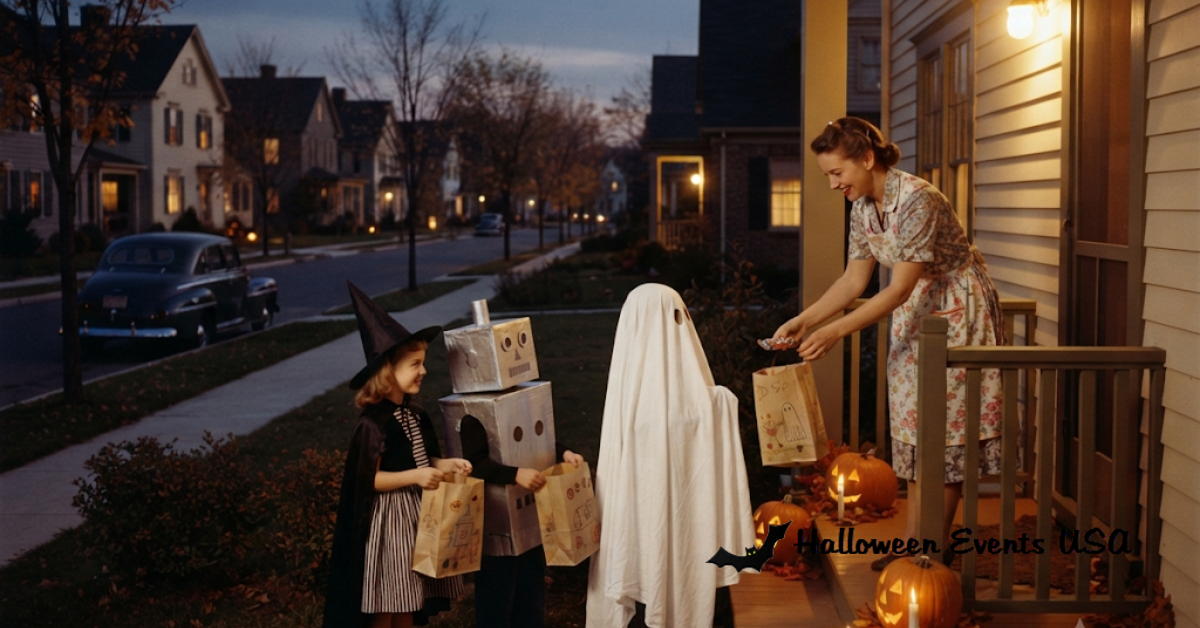
Most of what people call traditional Halloween is a blend of medieval custom and mid twentieth century American invention.
- Genuinely ancient: Costumes as disguise, bonfires, the thinning of the veil, harvest timing.
- Medieval: Door to door performance, carved lanterns, soul cakes.
- American and modern: Pumpkins, the phrase trick or treat, mass produced candy, house decorating.
- Very recent: Haunted attractions as an industry, Trunk or Treat, adult costume parties at scale.
Why the Old Version Still Matters
The oldest layer of Halloween was about community. Neighbors opened their doors, children performed, the dead were remembered, and the whole village lit the same fire.
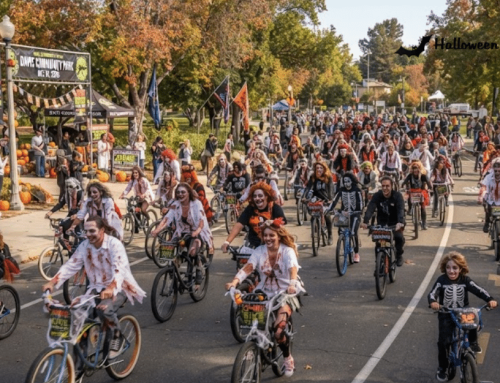
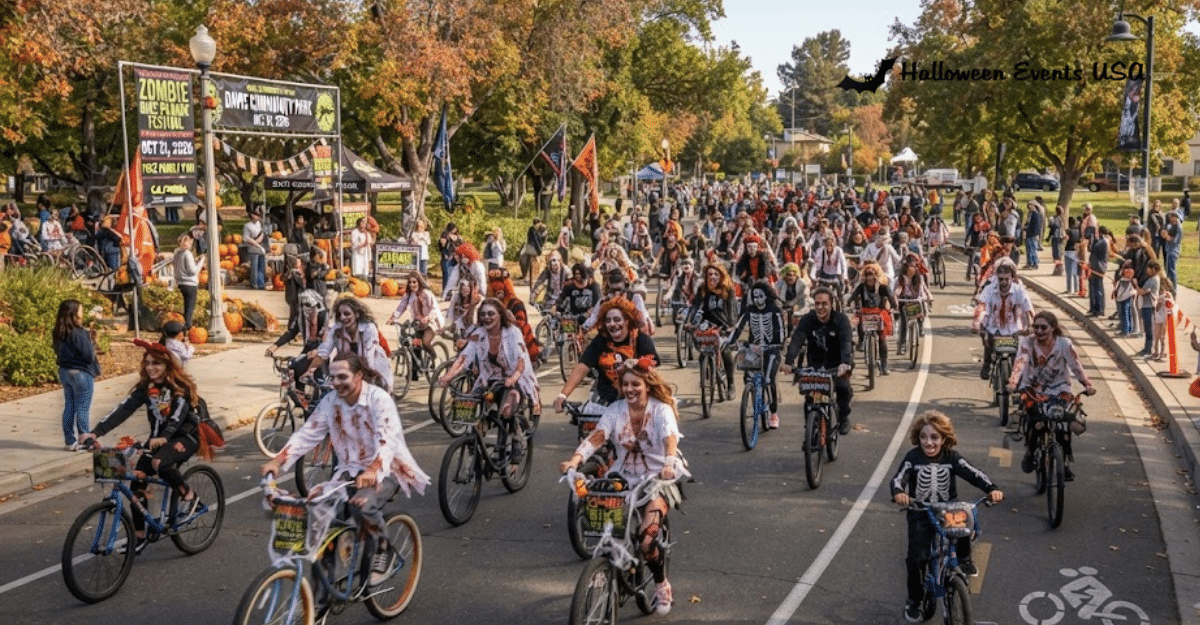
That version is still there, underneath the plastic and the candy. A neighborhood carnival, a costume parade or a shared bonfire sits far closer to the original than anything you can buy in a store.
The Short Version
Halloween began as a harvest festival, became a holy day, travelled as an immigrant custom, turned into a truce with vandals, and finally settled into a candy holiday. Every one of those layers is still in there.
Halloween Events USA has been celebrating old fashioned Halloween since 2011, covering the lore, the traditions and the events happening across the country, so you can find the carnivals, parades and haunts near you this October.