Halloween is built for people who like being scared. Fog machines, chainsaw actors, screaming from behind a corn maze wall. None of that works for a two year old in a dinosaur costume who just wants to hold a pumpkin bucket.
If you are hunting for not-scary Halloween events for toddlers and little kids, the good news is that October is full of them. They just do not get the loud marketing that haunted houses do. This guide covers the event types that reliably work for kids under six, the ones to avoid, and how to check whether an event is genuinely gentle before you load everyone into the car.
Quick answer: Not-scary Halloween events for toddlers include daytime trunk-or-treats, pumpkin patches, zoo boo days, library story times, mall trick-or-treating, and costume parades. Look for listings that say “lights on,” “no-scare,” “sensory friendly,” or “daytime,” and confirm there are no costumed actors, strobe lights, or fog machines.
What Makes a Halloween Event Toddler Friendly?
Not every event labeled “family friendly” is actually toddler friendly. Plenty of haunted trails describe themselves that way and still have someone in a mask jumping out at knee height. Use this checklist before committing:
- Daylight hours. Anything starting after sunset raises the odds of scary staging and a blown bedtime.
- No costumed actors. Volunteers in friendly costumes handing out candy is fine. Performers whose job is to startle people is not.
- No fog, strobes, or sudden loud audio. These are the three biggest triggers for sensory overwhelm in young kids.
- Short lines and open layouts. Toddlers do not queue. Look for open-field or parking-lot formats over narrow indoor mazes.
- Stroller and wagon access. Little legs give out about 25 minutes in.
- Restrooms and a changing table on site. Farms and rural venues are often the weak point here.
- A clear exit. You want to be able to leave in 90 seconds without walking back through the whole event.
If an event page does not answer these, message the organizer on Facebook. Most reply within a day, and the answer tells you a lot about how the event is run.
Best Not-Scary Halloween Events for Toddlers and Little Kids
1. Trunk-or-Treat in a Parking Lot
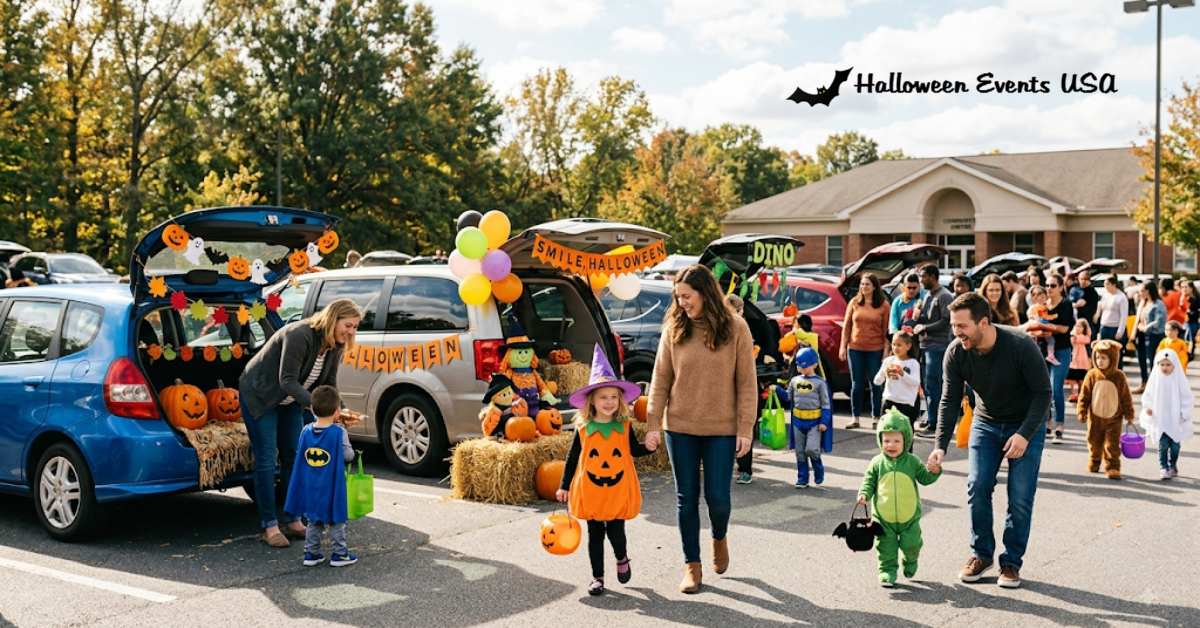
Best for ages 1 to 8. Cars park in a circle, families decorate their trunks, kids walk from car to car collecting candy. Usually run by churches, schools, fire departments, or community centers.
Why it works for little kids: everything is in one flat, contained space, it almost always runs in daylight, and the walking distance is tiny compared to a residential trick-or-treat route. Toddlers also love the repetition of car, candy, car, candy.
Look for the “trunk or treat” listings in your area starting mid-October. Many run the weekend before Halloween rather than on the night itself, which is ideal because you get the practice run before the big day.
2. Pumpkin Patches and Fall Farm Days
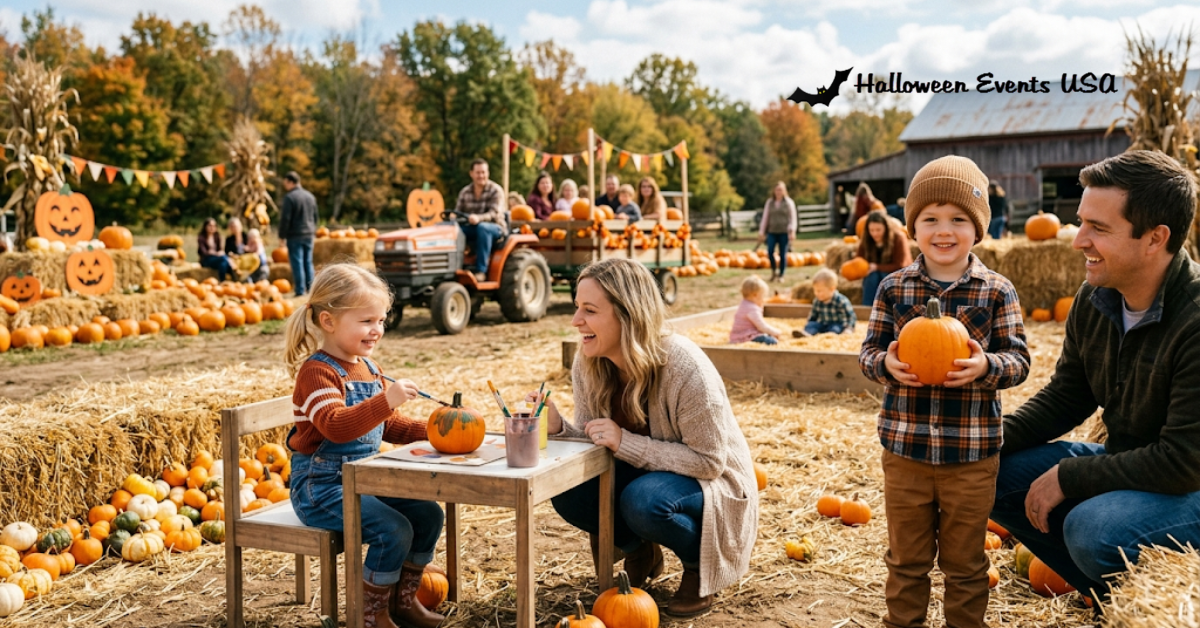
Best for ages 1 to 10. Pumpkin patches are Halloween-adjacent rather than Halloween-themed, which is exactly why they work. Nobody is trying to frighten anyone. It is orange, it is outdoors, and there is usually a hay bale to climb.
Most patches add toddler-scale extras like corn boxes, small animal pens, tractor-pulled wagon rides, and pumpkin painting stations. Painting is worth noting because it gives little kids the pumpkin experience without carving tools.
Practical tip: go on a weekday morning if you can. Weekend afternoons at popular patches turn into 40 minute wagon ride queues, which is where the day usually falls apart.
3. Zoo Boo and Aquarium Halloween Days
Best for ages 2 to 9. Nearly every mid-sized zoo and aquarium in the USA runs a Halloween weekend event. They are typically daytime, ticketed, and deliberately designed so the youngest visitors are comfortable, because scaring animals is bad for business too.
You usually get costume-friendly admission, candy stations along the normal path, pumpkin enrichment feedings for the animals, and craft tables. The route is one you would walk anyway, so the Halloween layer is a bonus rather than the whole event.
Book early. Zoo Halloween weekends are the most likely event on this list to sell out.
4. Library and Community Center Story Times
Best for ages 1 to 5. The most underrated option, and almost always free. Public libraries run Halloween story times through the last two weeks of October with themed picture books, simple crafts, a song, and sometimes a small costume parade around the room.
They are short, usually 30 to 45 minutes, which matches a toddler attention span better than any ticketed event. Staff are trained to keep the tone gentle. Check your library system’s events calendar directly, since these rarely appear on the big event listing sites.
5. Mall and Main Street Trick-or-Treating
Best for ages 1 to 8. Shopping centers and downtown business districts run daytime trick-or-treat trails where kids go store to store. Everything is indoors or on a sidewalk, climate controlled, well lit, and there is a bathroom every hundred feet.
The trade-off is crowds. Go in the first 30 minutes after it opens. The last hour of a mall trick-or-treat is a solid wall of strollers.
6. Costume Parades and Preschool Parties
Best for ages 2 to 7. Daycares, preschools, gyms, and neighborhood associations often run a simple parade: kids walk a loop in costume, parents clap, everyone gets a snack. There is no theme beyond dressing up.
This is the softest possible entry point. For a first-time Halloween kid, a 15 minute parade among faces they already know is a far better introduction than a big public event.
7. Sensory Friendly Halloween Events
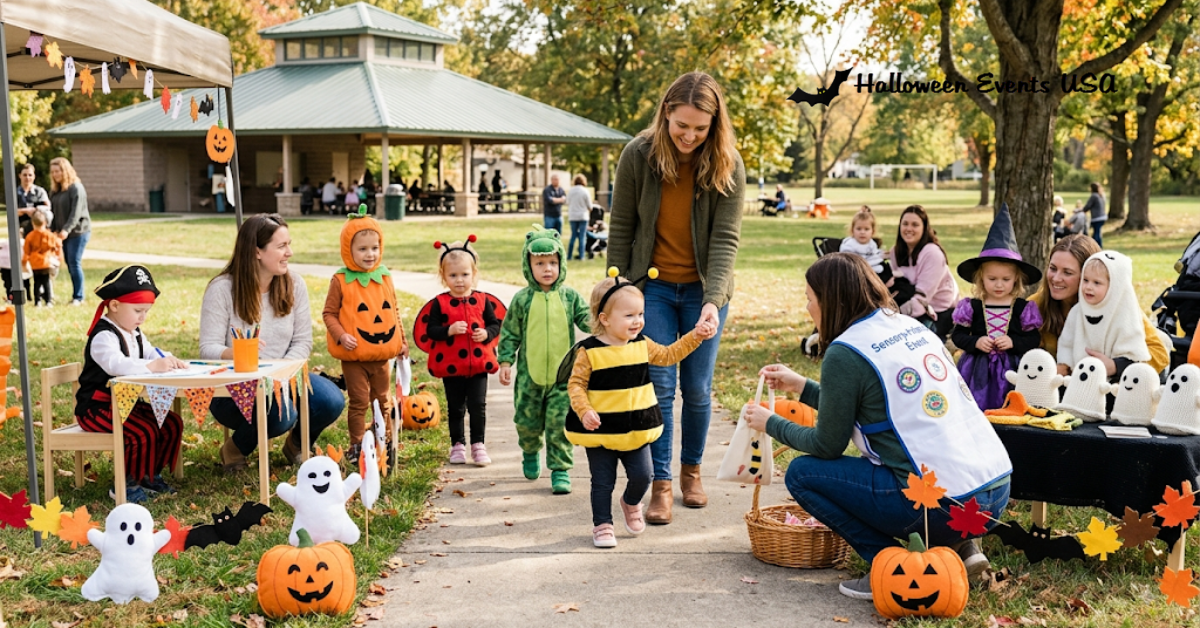
Best for any age with sensory sensitivities. A growing number of venues now run explicitly sensory friendly sessions: lights up, sound down, capacity capped, quiet room available. Search the exact phrase “sensory friendly Halloween” plus your city. These are also excellent for neurotypical toddlers who simply overwhelm easily.
Halloween Events to Skip With Little Kids
Save these for when they are older. Around age 10 for most, though it varies a lot by child:
- Haunted houses and haunted trails, including “mild” or “family hour” versions
- Night-time corn mazes
- Haunted hayrides
- Horror movie screenings, even outdoors
- Escape rooms with a Halloween theme
- Any event where the marketing photos show actors in makeup
One extra warning: some pumpkin patches turn into haunted attractions after dark on the same site. The morning version and the evening version can be completely different experiences. Check the hours.
At What Age Can Kids Handle Scary Halloween Stuff?
There is no fixed cutoff, but child development research consistently shows that young children cannot reliably separate fantasy from reality, and that this ability develops gradually rather than switching on at a set age. That is why a mask can genuinely frighten a three year old even after they watch you put it on.
A rough guide:
- Ages 1 to 3: Costumes on adults can be upsetting. Keep everything cheerful and daylight only. Skip masks entirely.
- Ages 4 to 6: Most enjoy “silly spooky” like friendly ghosts and cartoon skeletons. Realistic gore and jump scares still land as real.
- Ages 7 to 9: Many can handle mild haunted attractions, but the tolerance varies enormously between siblings.
- Ages 10 and up: Usually ready for a standard haunted house if they want to go.
The reliable signal is not age, it is your own child. If they hide behind you at a Halloween aisle in a store in September, they are not ready for an event in October.
How to Find Not-Scary Halloween Events Near You
- Search the right phrases. “Lights on trick or treat,” “no scare Halloween,” “sensory friendly Halloween,” and “daytime trunk or treat” all pull much better results than generic searches.
- Check parks and recreation calendars. City rec departments run some of the best free toddler Halloween programming and almost never advertise it well.
- Follow local Facebook parent groups. Church and school trunk-or-treats are frequently posted there first.
- Filter listings by start time. Anything beginning before 5 pm is almost certainly the gentle version.
- Read the age range in the listing. Events that state “ages 2 to 8” have thought about small kids. Events that say “all ages” often have not.
Tips to Prevent a Halloween Meltdown
- Practice the costume at home for a few days first, including sitting and walking in it
- Skip masks and use face paint or a hat instead, so their vision and breathing are not restricted
- Layer clothes underneath rather than adding a jacket that hides the costume
- Go in the first hour, before crowds and before nap pressure builds
- Bring a familiar snack, because a toddler on candy alone is a short-term project
- Let them carry a comfort item, even if it does not match the costume
- Plan for 45 minutes and treat anything beyond that as a bonus
- Agree on an exit signal with your partner before you walk in
- Let them opt out of any part of it without negotiation
Frequently Asked Questions
Are trunk-or-treats safe for toddlers? Yes, and they are usually safer than street trick-or-treating. Cars are parked and stationary, the area is enclosed, everything happens in daylight, and organizers are on site. Confirm engines are off and the lot is closed to through traffic.
What is a sensory friendly Halloween event? An event run with lights up, sound reduced, no fog or strobes, limited capacity, and often a designated quiet space. They are designed for children with sensory processing differences and work well for most toddlers.
Should a two year old wear a costume mask? No. Masks restrict vision and breathing and frequently upset kids at that age even when they chose the costume. Face paint, a hood, or a themed hat gives the same effect with none of the problems.
What time should toddlers trick-or-treat? Between 5 pm and 6:30 pm on Halloween night. You get remaining daylight, houses are already handing out candy, and you are home before the older kids and the scarier decorations come out.
Are pumpkin patches free? It varies. Many charge admission on weekends and are free on weekdays with pumpkins priced separately. Activity areas like wagon rides and corn boxes are often a separate wristband, so check pricing before you arrive.
Plan a Halloween Your Toddler Will Actually Enjoy
The best Halloween for a small child is short, bright, familiar, and over before anyone is tired. A 40 minute trunk-or-treat in a church parking lot will produce more genuine delight than any ticketed attraction, and it costs nothing.
Pick one gentle event this year, keep the expectations low, and let them build up to the spooky stuff on their own schedule. Browse our family friendly Halloween events listings to find daytime, no-scare options happening near you this October.